
Part 1: Indoor LED Displays – Balancing Clarity & Practicality
Indoor environments demand sharp visuals, low glare, and seamless integration, but priorities shift between cost, resolution, and installation flexibility. Below are the two most common indoor options, with their distinct advantages and drawbacks.
1.1 Indoor Fixed LED Displays
What Are They?
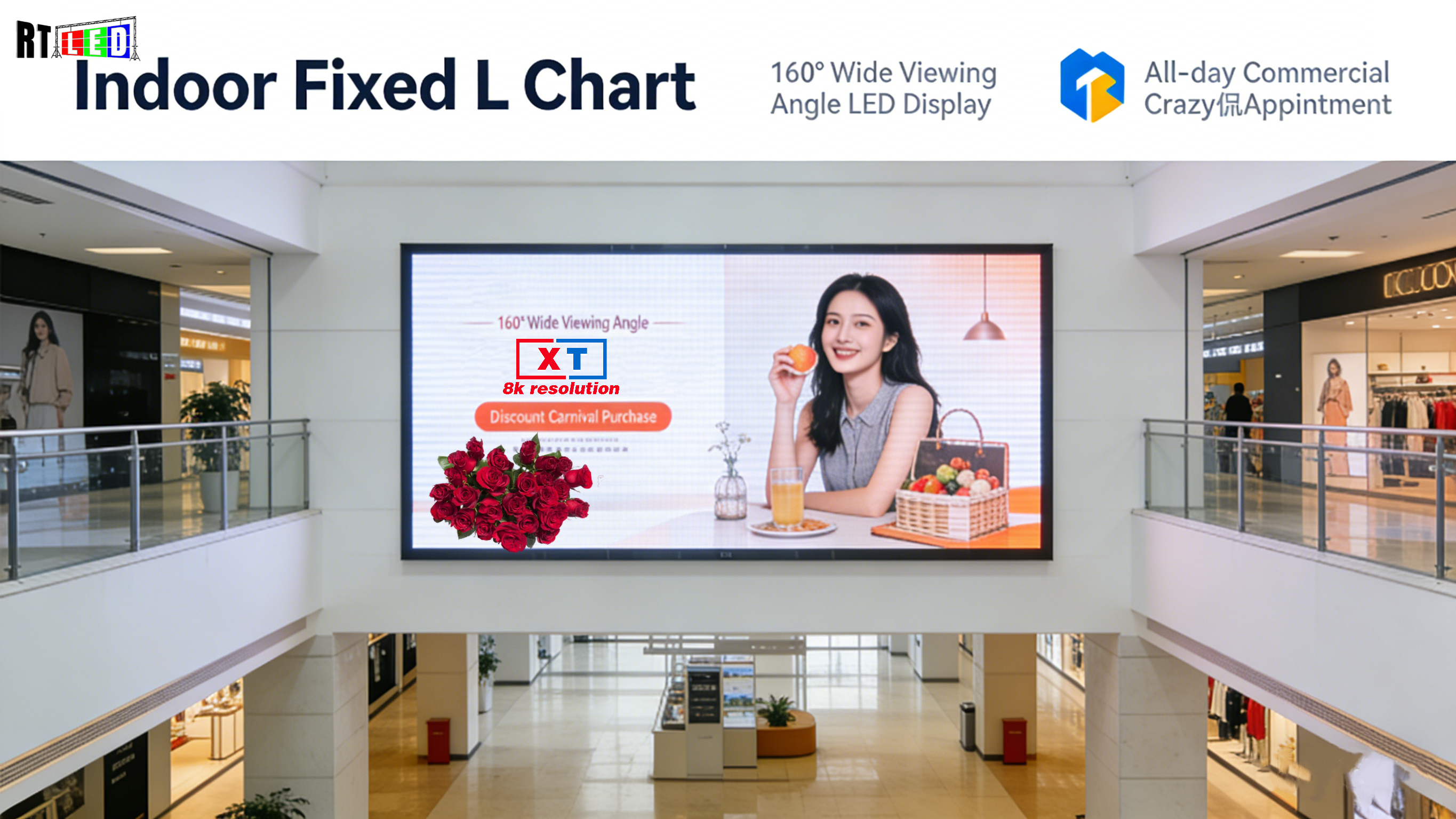
Permanent installations designed for long-term use in stable indoor settings (e.g., retail stores, conference rooms, lobbies). They feature standard pixel pitches (P2.0–P4.0) and prioritize affordability without sacrificing basic performance.
Pros (Advantages)
- Cost-Effective: One of the most budget-friendly indoor LED solutions, ideal for small businesses or projects with limited funds. Initial purchase and installation costs are 30–50% lower than fine-pitch displays.
- Easy Maintenance: Modular design allows quick replacement of faulty modules (standard 320×160mm or 640×320mm sizes are widely available). No specialized tools are needed for routine upkeep.
- Durable for Continuous Use: Built to operate 24/7 with a mean time between failures (MTBF) of ≥50,000 hours. Efficient heat dissipation systems prevent overheating in enclosed spaces.
- Versatile Viewing Angles: 160°+ horizontal/vertical viewing angles ensure clear visibility from all corners of the room, making them suitable for large audiences (e.g., auditoriums).
- Visible Pixel Gaps: Larger pixel pitches (P2.0–P4.0) result in noticeable “grid lines” when viewed up close (≤2 meters). This makes them unsuitable for detailed content like data visualization or high-definition video.
- Limited Resolution: Max out at Full HD (1920×1080) for larger screens; 4K/8K resolution is not feasible with standard pixel pitches.
- Less Seamless Than Fine-Pitch: Even with careful installation, small gaps between modules may be visible, reducing immersion for critical applications (e.g., broadcast studios).
- Not Ideal for Bright Rooms: Brightness ranges from 800–1500 nits, which may appear dim in spaces with large windows or strong overhead lighting (no anti-glare coating on basic models).
Cons (Disadvantages)
Expert Recommendations
Choose indoor fixed LED displays if:
- You have a tight budget and need a permanent, low-maintenance solution.
- Viewing distance is ≥3 meters (e.g., retail signage, hotel lobbies).
- Content is simple (e.g., text, images, basic videos) rather than high-definition or detailed data.
- Avoid if: You need close-range viewing (≤2 meters) or ultra-smooth visuals for professional presentations.
1.2 Indoor Fine-Pitch LED Displays
What Are They?
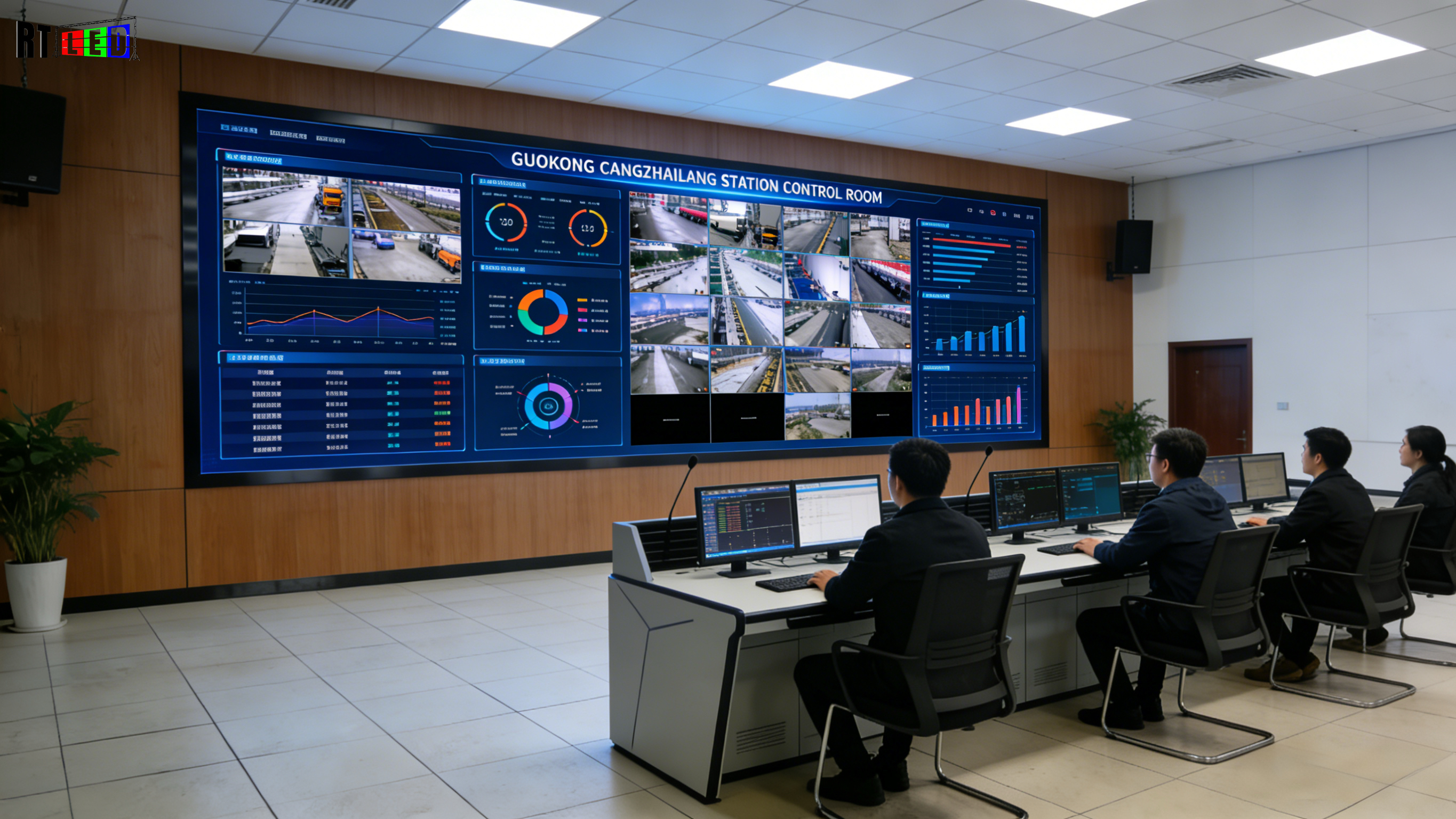
High-end indoor displays with pixel pitches ≤P1.2 (e.g., P0.9, P1.0, P1.2). They deliver ultra-high definition (UHD) visuals with minimal pixel gaps, rivaling LCD/OLED screens for close-range viewing.
Pros (Advantages)
- Ultra-HD Seamless Visuals: Tiny pixel gaps (≤1.2mm) create a bezel-less, immersive image. 4K/8K resolution is achievable even on small screens (e.g., 55-inch P0.9 displays support 4K).
- Superior Image Quality: 16-bit grayscale, ≥1000:1 contrast ratio, and accurate color reproduction (95%+ DCI-P3 gamut) make them perfect for detailed content (e.g., control room data, video conferencing).
- Low Glare & Eye Comfort: Matte surface treatments reduce reflections, even in well-lit rooms. Low blue light emission complies with TÜV Rheinland standards for long-term viewing.
- Energy Efficient: Advanced SMD (Surface Mount Device) chips (e.g., 2121, 1515) consume 30–40% less power than standard indoor displays, lowering long-term operating costs.
- High Upfront Cost: 2–3x more expensive than standard indoor fixed displays. A 100-inch P1.2 fine-pitch display can cost 50% more than a comparable LCD video wall.
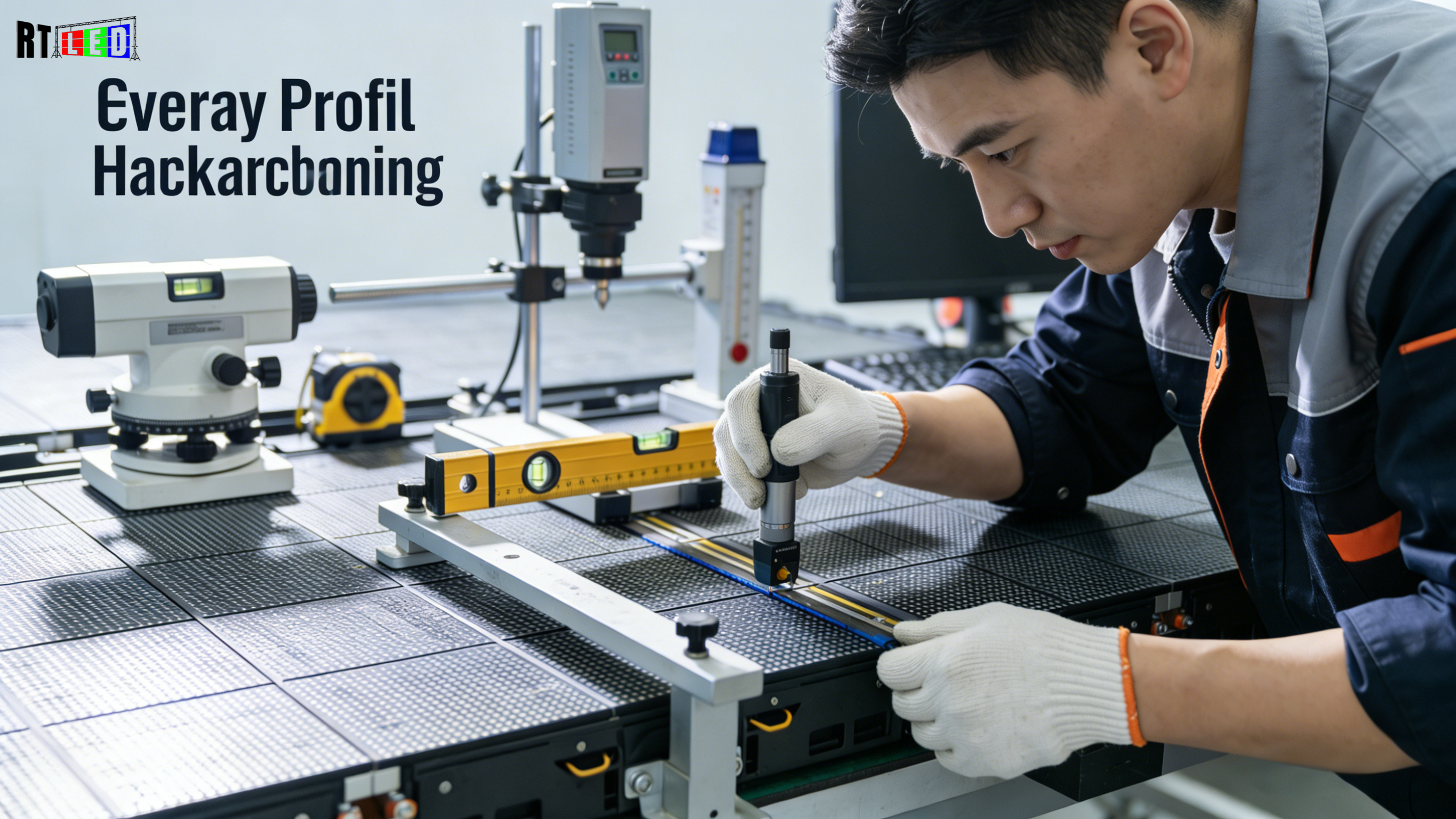
- Complex Installation: Requires precise alignment (≤0.1mm gap between modules) to avoid visual distortions. Professional calibration is mandatory, adding to installation fees.
- Heat Dissipation Challenges: Dense pixel arrays generate more heat. Basic models may require noisy cooling fans, which are disruptive in quiet environments (e.g., meeting rooms).
- Fragile Modules: Fine-pitch modules are more delicate than standard ones. Accidental impacts during installation or maintenance can cause permanent damage.
Cons (Disadvantages)
Expert Recommendations
Choose indoor fine-pitch LED displays if:
- You need close-range viewing (≤2 meters) or ultra-detailed content (e.g., control rooms, broadcast studios).
- Budget is not a primary constraint, and long-term performance is a priority.
- A seamless, bezel-less look is critical (e.g., museum exhibits, executive boardrooms).
- Avoid if: You have a limited budget or use simple content that doesn’t require high resolution.
Part 2: Outdoor LED Displays – Prioritizing Durability & Weather Resistance
Outdoor displays must withstand rain, dust, extreme temperatures, and strong sunlight. The two main options—rental and fixed iron cabinet—differ significantly in portability, durability, and cost.
2.1 Outdoor Rental LED Displays
What Are They?
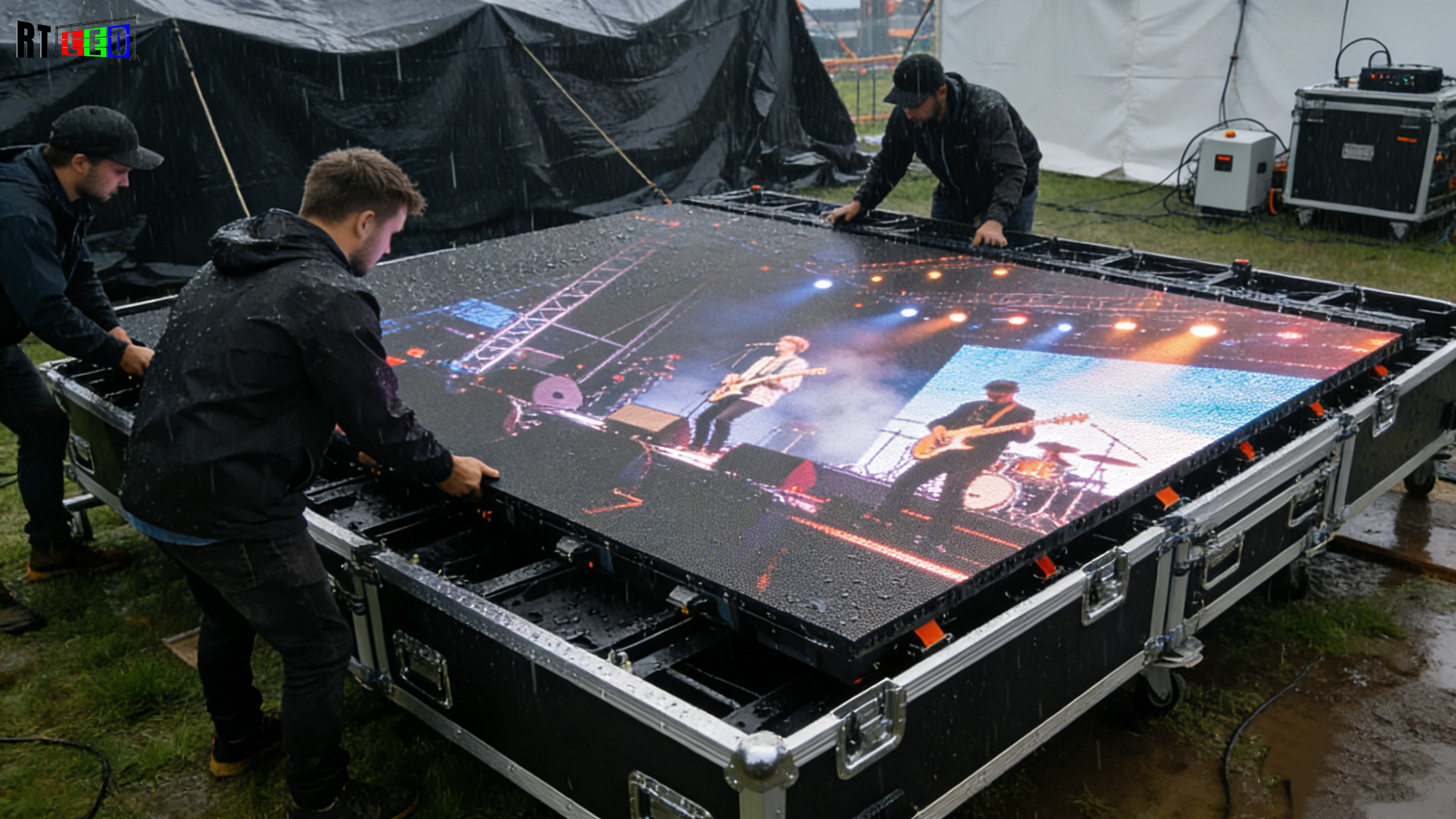
Portable, modular displays designed for temporary events (e.g., concerts, trade shows, festivals). They feature lightweight cabinets, quick-lock systems, and IP65+ waterproof/dustproof ratings.
Pros (Advantages)
- High Portability: Lightweight cabinets (≤8kg each) and compact design make transportation and setup easy. No heavy lifting equipment is needed—teams of 2–3 people can assemble a 100-square-meter screen in 2–3 hours.
- Quick Assembly/Disassembly: Magnetic or quick-lock connectors enable fast module attachment. Ideal for events with tight schedules (e.g., one-day festivals or multi-venue tours).
- Weather Resistant: IP65+ rating protects against rain, dust, and light splashes. Sealed connectors prevent water ingress during temporary outdoor use.
- Versatile Configuration: Supports curved, concave, or convex installations. Compatible with multiple input sources (HDMI, DP, 5G/4G streaming) for live events.
- Cost-Effective for Short-Term Use: Renting avoids the high upfront cost of purchasing a permanent outdoor display. Pay-as-you-go pricing is ideal for occasional events (≤10 times per year).
- Less Durable for Long-Term Use: Lightweight materials (e.g., aluminum cabinets) are prone to wear and tear with frequent transportation. Modules may develop loose connections after repeated assembly.
- Lower Brightness Than Fixed Models: Brightness ranges from 5000–7000 nits, which may be insufficient in direct midday sunlight (fixed iron cabinet displays reach 8000–10,000 nits).
- Higher Long-Term Cost: If you host events regularly (≥15 times per year), renting becomes more expensive than purchasing a permanent display. Maintenance fees for rental equipment (e.g., module replacement) add up over time.
- Limited Pixel Density: Pixel pitches start at P2.97 (outdoor rental), resulting in lower resolution than fixed fine-pitch outdoor displays. Not suitable for detailed content viewed from close range (≤10 meters).
Cons (Disadvantages)
Expert Recommendations
Choose outdoor rental LED displays if:
- You need a temporary solution for events (e.g., concerts, trade shows, pop-up advertising).
- Portability and quick setup are critical (e.g., multi-city tours or short-term campaigns).
- You host events occasionally (≤10 times per year) and want to avoid upfront investment.
- Avoid if: You need a permanent installation or high-resolution visuals for close-range viewing.
2.2 Outdoor Fixed Iron Cabinet LED Displays
What Are They?
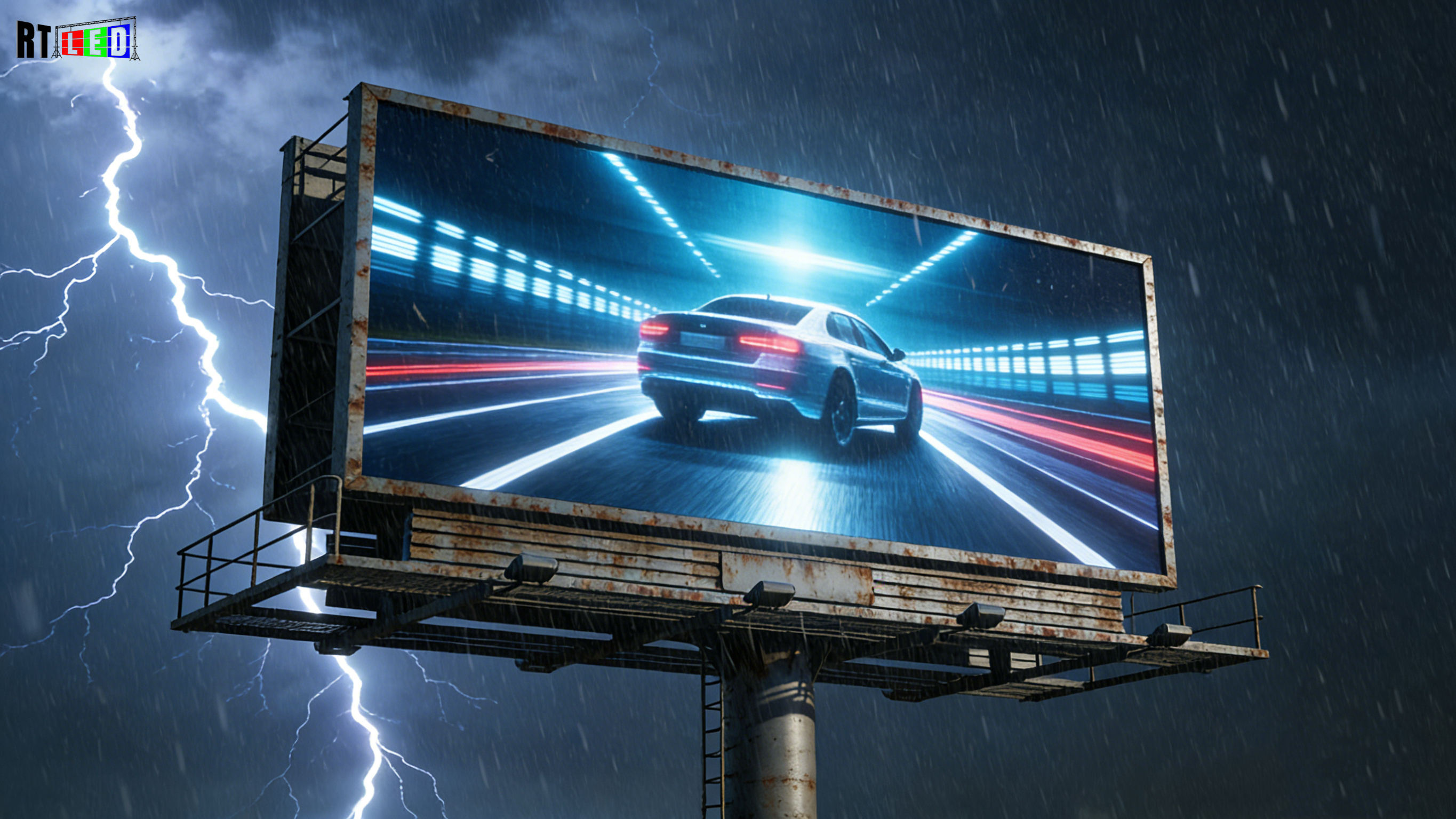
Permanent outdoor installations built for harsh environments. They feature rugged iron cabinets with anti-corrosion coating, IP65–IP67 waterproof/dustproof ratings, and reinforced structures.
Pros (Advantages)
- Extreme Durability: Iron cabinets with powder coating resist corrosion, rust, and physical impact. Wind load resistance ≥0.8kPa and temperature tolerance (-30°C to 60°C) ensure longevity in harsh conditions (e.g., coastal areas, deserts).
- Superior Weatherproofing: IP67 rating (for premium models) protects against heavy rain, dust storms, and even temporary submersion. Sealed module gaps and waterproof connectors prevent water damage during long-term outdoor use.
- High Brightness & Visibility: 8000–10,000 nits brightness cuts through direct sunlight. Wide viewing angles (140°+ horizontal) ensure clarity from all directions (e.g., stadiums or busy intersections).
- Low Maintenance: Dust-proof cooling systems and replaceable LED modules reduce downtime. MTBF ≥100,000 hours means reliable 24/7 operation with minimal upkeep.
- Cost-Effective Long-Term: While upfront costs are high, permanent installations eliminate rental fees and frequent replacement costs. Ideal for long-term use (≥5 years).
- High Upfront Cost: 3–4x more expensive than rental displays. A 50-square-meter P6.0 fixed iron cabinet display can cost 50,000–80,000, including installation.
- Bulky & Hard to Install: Heavy cabinets (≥20kg each) require cranes or specialized lifting equipment for installation. Structural modifications to buildings or poles may be needed, increasing project timelines.
- Limited Flexibility: Once installed, reconfiguring or relocating the display is costly and time-consuming. Not suitable for temporary or changing needs.
- Higher Energy Consumption: Brightness levels of 8000–10,000 nits consume more power than rental models. However, auto-brightness adjustment (based on ambient light) helps reduce energy use.
Cons (Disadvantages)
Expert Recommendations
Choose outdoor fixed iron cabinet LED displays if:
- You need a permanent installation (e.g., billboards, stadium scoreboards, highway signs).
- The display will be exposed to harsh weather (e.g., heavy rain, extreme temperatures, dust).
- You plan to use the display for ≥5 years (long-term cost savings justify upfront investment).
- Avoid if: You need a portable solution or have a limited budget for upfront costs.
Part 3: Side-by-Side Comparison of All Four LED Display Types
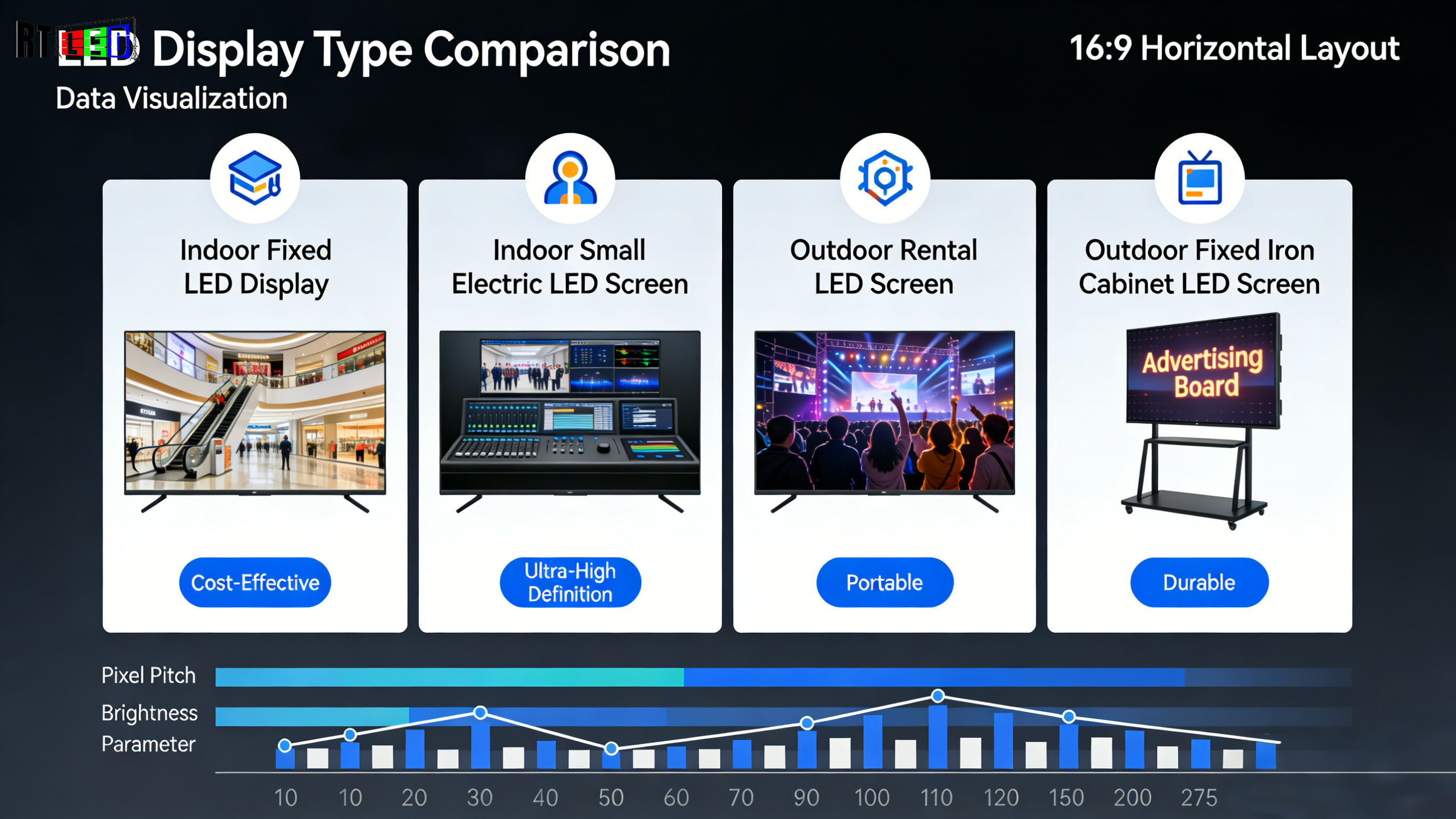
| Feature | Indoor Fixed | Indoor Fine-Pitch | Outdoor Rental | Outdoor Fixed Iron Cabinet |
| Pros | - Cost-effective | - Ultra-HD seamless | - Portable | - Extreme durability |
| - Easy maintenance | - Superior image quality | - Quick setup/teardown | - IP65–IP67 weatherproofing | |
| - Durable 24/7 use | - Low glare/eye comfort | - Weather resistant (IP65+) | - High brightness (8000–10,000 nits) | |
| - Wide viewing angles | - Energy efficient | - Versatile config | - Low long-term maintenance | |
| Cons | - Visible pixel gaps | - High upfront cost | - Less durable long-term | - High upfront cost |
| - Limited resolution | - Complex installation | - Lower brightness | - Bulky/hard to install | |
| - Dim in bright rooms | - Heat dissipation issues | - Higher long-term cost (if frequent use) | - Limited flexibility | |
| Pixel Pitch | P2.0–P4.0 | P0.9–P1.2 | P2.97–P6.0 | P4.0–P10.0 |
| Brightness | 800–1500 nits | 1000–2000 nits | 5000–7000 nits | 8000–10,000 nits |
| IP Rating | IP20–IP30 (not waterproof) | IP20–IP30 (not waterproof) | IP65+ | IP65–IP67 |
| Ideal Use Case | Retail, lobbies, auditoriums | Control rooms, broadcast studios, museums | Concerts, trade shows, festivals | Billboards, stadiums, highway signs |
Part 4: Step-by-Step Decision-Making Framework
- Define Your Core Needs:
◦ Environment: Indoor or outdoor? (Outdoor requires weatherproofing; indoor prioritizes clarity.)
◦ Usage Duration: Permanent (choose fixed models) or temporary (choose rental)?
◦ Viewing Distance: Close (≤2 meters = fine-pitch) or far (≥10 meters = larger pixel pitches)?
◦ Content Type: Simple (text/images = standard models) or detailed (4K/data = fine-pitch)?
- Evaluate Budget Constraints:
◦ Short-term budget: Rental or indoor fixed models are more affordable upfront.
◦ Long-term budget: Fixed iron cabinet (outdoor) or fine-pitch (indoor) offer better value over 5+ years.
- Assess Environmental Factors:
◦ Indoor: Check lighting conditions (bright rooms may need anti-glare fine-pitch displays).
◦ Outdoor: Consider weather (coastal areas need IP67; hot regions need temperature resistance).
- Prioritize Key Features:
◦ If portability matters: Outdoor rental is the only option.
◦ If seamless UHD is critical: Indoor fine-pitch is non-negotiable.
◦ If durability is top priority: Outdoor fixed iron cabinet is best.
- Verify Manufacturer Reliability:
◦ Look for certifications (CE, FCC, RoHS) and warranty terms (1–3 years for indoor, 3–5 years for outdoor).
◦ Check customer reviews for maintenance issues (e.g., fine-pitch heat dissipation, rental module durability).
Conclusion
Choosing the right LED display boils down to understanding tradeoffs: indoor fixed models offer affordability but lack resolution; fine-pitch displays deliver UHD but cost more; outdoor rental models are portable but less durable; fixed iron cabinets are rugged but expensive upfront. By aligning your needs (environment, budget, content, duration) with the pros and cons of each type, you can avoid costly mistakes and select a display that
Post time: Dec-17-2025


